The Northwest Commission on Colleges and Universities (NWCCU), the accrediting body for WSU, has approved the offering of bachelor’s degrees with as few as 90 credits (V714). The State of Washington has also approved the offering of these degrees by colleges and universities in Washington (RCW 28B.10.118). When the Faculty Senate was presented with changes to academic regulations necessary to facilitate offering such degrees, we decided to table consideration of these changes until more feedback could be gathered on pros and cons of offering these degrees at WSU. The Faculty Senate Executive committee distributed a FAQ document explaining the purpose of 90 credit bachelor’s (90CB) degrees and their specific requirements, along with a survey seeking feedback on these degrees.
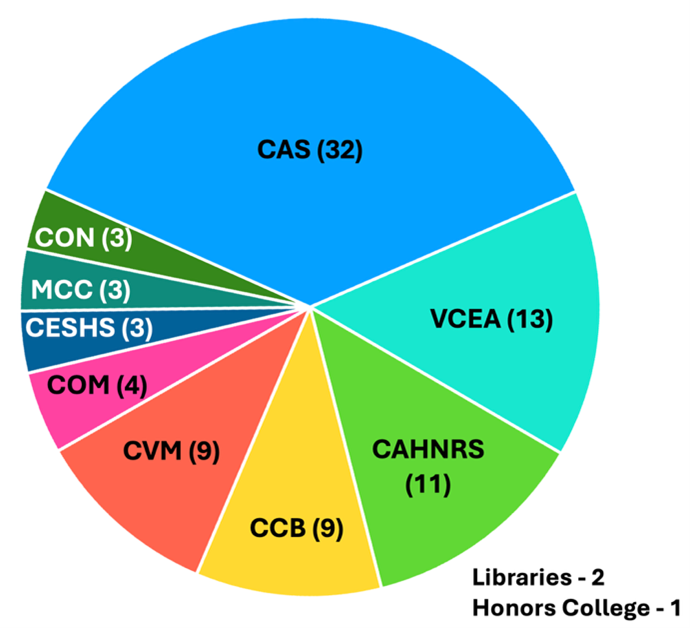
We received replies to the survey from 90 faculty members, representing 10 different colleges. The College of Arts & Sciences had the most respondents with 32, followed by the College of Engineering & Architecture with 13, CAHNRS with 11, the College of Business with 9 and the College of Veterinary Medicine with 9. The remaining 16 responses came from a combination of the colleges of Nursing, Medicine, Communications, Honors, Education, and the Libraries. The qualitative feedback from the survey was assessed manually and by Copilot with answers taken together judged as opposed, mixed in opinion, or overall supportive. The AI analysis and manual scoring gave similar results.
Survey Findings
The Downside
One of the primary concerns was possible enrollment shifts, the potential for students to migrate to 90CBs, harming majors that cannot reduce credits. Other concerns included conflicts with accreditation standards and reputational harm that may come from offering what may be perceived as less rigorous degrees. There were also budget concerns for WSU given the potential loss of up to 25% of credit-hour tuition due to enrollment shifts. There were also concerns that offering these degrees could lead to increased competition for students between departments. For those departments that lose in that competition, there may be a loss of faculty.
Faculty were concerned about the reduction in elective and/or UCORE courses in a 90CB diminishing the breadth of education, reducing writing and critical thinking skills, and generally weakening the liberal arts foundation of a WSU degree. They also felt that students may be less prepared at graduation to compete for jobs or admission to graduate school and other potential long‑term consequences for career flexibility. There was concern that students may regret the 90CB later and, if they do, returning for a regular bachelor’s degree may be difficult. It was also pointed out that the availability of 90CB degrees complicates student advising.
The Upside
There were potential positive aspects to 90CB degrees cited in the survey responses. First and most obvious is the reduced cost and time required for the degree. These degrees may be an attractive option for non-traditional students and for reengagement of returning students with some college but no degree. They may also increase enrollment, particularly if these degrees are new offerings such as specialized technical or career-focused degrees, or degrees that transition to graduate programs like 3+1 Master’s degree programs. WSU may also need these degrees to remain competitive with other institutions offering 90CB degrees.
Suggested Criteria and Constraints
Many respondents commented on possible criteria for 90CB degrees that would make them supportable. Faculty commented that the 90CB degrees should be designed de novo and not simply be a reduced credit version of existing degrees. These degrees should still require a strong general education component and be congruent with the outcomes of the general education reform process currently underway. Differences between 120-credit and 90-credit degrees need to be clearly communicated to students to avoid confusion. They should have a name that clearly articulates the difference.
In addition to distinguishing these degrees from current bachelor’s degrees, thorough market research needs to be conducted to know what employers actually think about any particular 90CB degree and if graduate programs will accept them as qualifying for admission. It would also be good to know what alumni feel about these degrees. WSU needs to conduct an analysis of the impact of launching these degrees on enrollment and tuition revenue. Given all the unknowns and uncertainties regarding these degrees, it would be prudent to offer a small number of degrees as part of a pilot program before system-wide adoption.
Conclusion
Faculty articulated opposition to the adoption of 90CB degrees, especially if there was a broad mandate to simply convert standard (120 credit) bachelor’s degrees to 90CB degrees. At the same time, there was support for 90CBs that are intentionally designed to address the need for applied, workforce-oriented degrees that target specific student populations. These degrees should have distinct learning outcomes and maintain standards of academic integrity and be clearly differentiated from regular bachelor’s degrees. A potential adoption of 90CB degrees should begin as a pilot program with a limited number of degree proposals.