The Faculty Senate was called to order by Robert Greenberg, Chair on Thursday November 8, 2012, in FSHN T101 at 3:30 p.m. Thirty (30) members were present fifteen (15) absent with five (5) nonvoting members present.
Minutes of October 25, 2012 Meeting were approved as circulated. Announcements. (Information Items)
- Senate Officers met with the Provost on October 16, 2012.
- Senate Officers met with President Floyd on October 31, 2012.
Announcements (Reports).
- Remarks by the Chair.—R. Greenberg
- The Executive Committee met with the President and Provost and discussed the 5 year program to review Centers, Institutes and Laboratories. The Research and Arts Committee has had trouble in the past getting self-studies from some directors. The Provost has agreed to send a letter with the Research and Arts request informing the directors they are to comply or they will no longer be recognized as an approved unit. The Executive Committee also met with V. Murali to discuss ZUZZIS and the many problems. She has agreed to come address the Senate in spring.
- Presentation by Prema Arasu, Vice Provost of International Programs
- P. Arusa discussed the importance of including international strategic goals in the curriculum as well as study abroad. The complete presentation is available on the Senate website www.facsen.wsu.edu .
Additions or Changes to the Agenda.
- There were no additions or changes to the agenda.
Agenda Items. (Action Items)
- Recommendation from Graduate Studies for Graduate Major Change Bulletin #2 (Exhibit R).—P. David
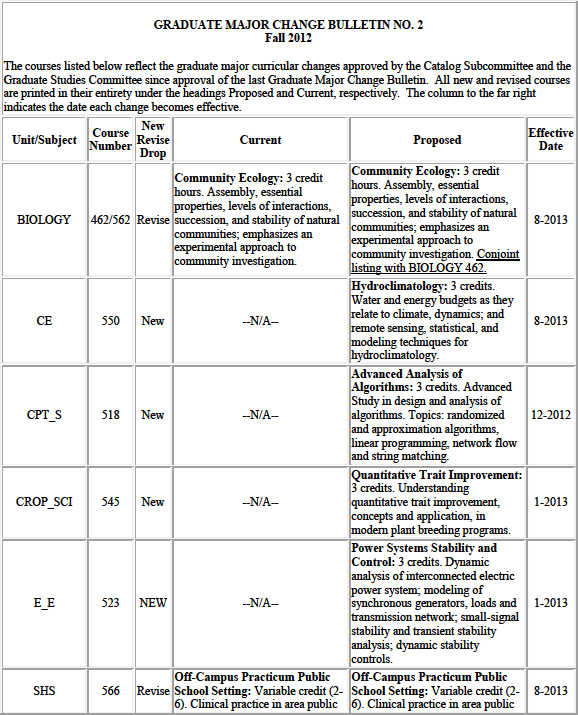
Motion carried.
- Recommendation from Graduate Studies for the Removal of the Graduate Certificate in General Engineering Management (Exhibit S).—P. David
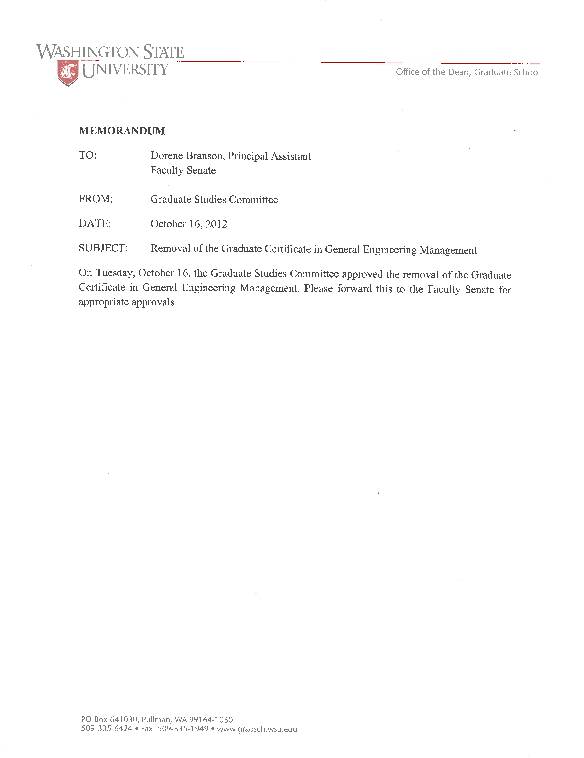
Motion carried.
- Recommendation from Academic Affairs for Undergraduate and Professional Major Change Bulletin #3 (Exhibit T).—C. Parks
| UNDERGRADUATE AND PROFESSIONAL MAJOR CHANGE BULLETIN NO. 3 Fall 2012 —COURSES–– The courses listed below reflect the undergraduate major curricular changes approved by the Catalog Subcommittee since approval of the last Undergraduate Major Change Bulletin. All new and revised courses are printed in their entirety under the headings Current and Proposed, respectively. The column to the far right indicates the date each change becomes effective. | |||||
| Prefix | Course Number | New Revise Drop | Current | Proposed | Effective Date |
| BIOLOGY | 428 | Revise | Mammalogy 4 ( | Mammalogy 4 (3-3) Course Prerequisite: BIOLOGY 106. Ecology, systematics, and evolution of mammals. | 1-13 |
| ENGLISH | 495 | New | –N/A– | Rhetoric of Science and Technology 3 Written, visual, and verbal conventions of scientific disciplines for academic, scientific, technical, and public audiences. | 8-13 |
| MATH | 115 | New | –N/A– | Math 105 Tutorial 2 Course Prerequisite: Department approval; concurrent enrollment in MATH 105. Tutorial for MATH 105 focusing on concept development and mastery and skill proficiency. S, F grading. | 1-13 |
| MATH | 116 | New | –N/A– | Math 106 Tutorial 2 Course Prerequisite: Department approval; concurrent enrollment in MATH 106. Tutorial for MATH 106 focusing on concept development and mastery and skill proficiency. S. F grading. | 1-13 |
| MATH | 431 | Revise | Intersections of Culture | Intersections of Culture | 8-13 |
| and Mathematics | and Mathematics 3 Course Prerequisite: MATH 301 with a C or better. Gender/race/ethnicity differences; social consequences; cultural influences on development and learning of mathematics; role of women, people of color in mathematics. Credit not granted for both MATH 431 and MATH 531. Offered at 400 and 500 level. | ||||
| TCH_LRN | 409 | New | –N/A– | Fundamentals of Curriculum and Assessment for Teaching English Language Learners 3 Research in curriculum development for and assessment of language minority students. | 1-13 |
| UNDERGRADUATE AND PROFESSIONAL MAJOR CHANGE BULLETIN NO. 3 Fall 2012 —REQUIREMENTS–– The requirements listed below reflect the undergraduate major curricular changes approved by the Catalog Subcommittee since approval of the last Undergraduate Major Change Bulletin. All changes are underlined. Deletions are crossed out. The column to the far right indicates the date each change becomes effective. | ||
| Department | Proposed | Effective Date |
| Molecular Biosciences Revise requirements for Minor in Molecular Biology | Molecular Biology A minor in molecular biology requires 20 hours including the following courses: MBIOS 301, 305, 303, 304; MBIOS 401or 450; | 8-13 |
| upper-division work taken in residence at WSU or through WSU-approved education abroad or educational exchange courses. A student whose major is in the School of Molecular Biosciences cannot be granted a minor in molecular biology. | ||
| Molecular Biosciences Revise requirements for Minor in Genetics and Cell Biology | Genetics and Cell Biology A minor in genetics and cell biology requires 16 hours under the genetics and cell biology degree program at the 300-400- level, including MBioS 301, 401, and 423. Additional credits may be selected from BIOLOGY 321 | 8-13 |
| Molecular Biosciences Revise requirements for Minor in Biochemistry | Biochemistry A minor in biochemistry requires 17 | 8-13 |
| Molecular Biosciences Revise requirements for Minor in Microbiology | Microbiology A minor in microbiology requires a minimum of 16 | 8-13 |
| Pharmacy Revise admissions | Pharmacy Prerequisites for Admission to the Professional | 8-14 |
| requirements for Professional Pharmacy Program | Pharmacy Program Written Communication I – 3 credits Written Communication II – 3 credits Philosophy – Logic, Critical Thinking or Ethics – 3 credits Microeconomics – ECONS 101 – 3 credits Introductory Psychology – PSYCH 105 – 3 credits Calculus – MATH 140 or 171 or 202 – 4 credits Statistics – STAT 212 – 3 credits Introductory Biology – BIOLOGY 106 and 107 – 8 credits Principles of Chemistry – CHEM 105 and 106 – 8 credits Organic Chemistry – CHEM 345 and | |
| Psychology Revise requirements for Bachelor of Science in Psychology | Footnotes 1 The PSYCH courses listed above under Groups I and II are recommended for that semester. Some are only offered in the fall or the spring. Group I FALL: PSYCH 350, 372, 384, 390, 401, 470, 490 | 8-12 |
| and Group I SPRING: PSYCH 350, 384, 401, 470, | ||
| 473. Group II FALL: PSYCH 321, 324, 333, | ||
| 361, 363, 440 and Group II SPRING: PSYCH 321, | ||
| 324, 333, |
Motion carried.
- Recommendation from Academic Affairs for UCORE Bulletin #2 (Exhibit U).—C. Parks
UNDERGRADUATE UCORE CATEGORY CHANGE BULLETIN NO. 2
FALL 2012
The courses listed below reflect conversion changes from GER codes to UCORE Categories, changes to established non-GER courses to add UCORE categories, and minor curricular changes as approved by the UCORE Committee and the Catalog Subcommittee. All revised courses are printed in their entirety under the headings Current and Proposed, respectively. The column to the far right indicates the date each change becomes effective.
| Prefix | Course Number | New Revise Drop | Current | Proposed | Effective Date |
| COM | 105 | Revise | Communication in Global Contexts 3 Communication processes and how they influence human behavior and construction of social reality across global contexts. | [HUM] Communication in Global Contexts 3 Communication processes and how they influence human behavior and construction of social reality across global contexts. | 1-13 |
| H_D | 403 | Revise | [CAPS] Families in Poverty 3 Course Prerequisite: Junior standing. Examining poverty in US and globally; description of groups most often poor; identification of effective solutions and successful interventions. | 1-13 |
Motion carried.
- Recommendation from Research and Arts for the Mestizo and Indigenous Center for Research and Outreach (Exhibit V).—E. Austin
Proposal for Mestizo and Indigenous Center for Research and Outreach at Washington State University
- Name of the unit—Pacific Northwest Center for Mestizo and Indigenous Research and Outreach
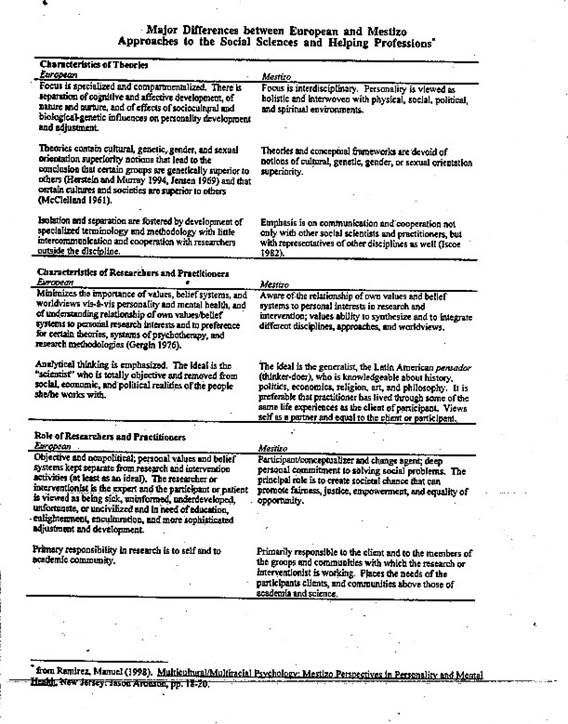
- Nature and scope it its activities— Our intention is to create, to our knowledge, the first Center for Mestizo and Indigenous Research and Outreach in the nation at Washington State University. Indigenous is a reference to those populations, who, by historical origin, were the original inhabitants of a designated land or nation who include Native American/American Indian, Alaska Native, and Native Hawaiian populations. Being indigenous incorporates the embodiment of an earth-based spirituality—namely, the recognition that all life is interconnected, and that this awareness influences and guides responsible action toward appropriate moral and ethical behavior, and a commitment to the well-being of others (Cervantes, 2008; McNeill & Cervantes, 2008). Among Latinas/os, ancestral histories are embedded in the Mestiza/o experience—namely, the forging of several different racial and ethnic backgrounds, including Caucasian, African, and Indigenous bloodlines that have contributed to their unique identity. The Mestiza/o experience and the indigenous backdrop are interrelated, and consequently form an essential basis toward a critical identity for many Latino groups. Ramirez (1998, 2004) refers to the Mestiza/o perspective as a dynamic, synergistic process developed from the amalgamation of peoples, philosophies, and cultures bridging the European continent and the Americas: the intermingling of physical, psychological, cultural, and spiritual ties between the Caucasian and the Indian. Ramirez (1998) further illustrates this perspective in delineating the major differences between European and Mestizo Approaches to the social sciences and helping professions, of which the proposed Center would embody (See Appendix A). In addition to shared mixed race, ethnic, and cultural backgrounds, Latinos/Mestizos and Indigenous peoples face a number of similar societal issues and problems. These include, but are not limited to educational achievement gaps, disproportionate numbers living in poverty, health issues, and the underutilization of healthcare services, as well as prejudice and discrimination on individual and institutional levels. Consequently, the primary goal of the Pacific Northwest Center for Mestizo and Indigenous Research and Outreach will be to focus on the generation, transmission, and application of knowledge to primarily serve the needs of Latino/Mestizo and Native/Indigenous communities in the Pacific Northwest with implications for communities both nationally and globally. Consistent with Washington State University’s land grant mission, the objective of the Center is to generate a strong program of interdisciplinary research and service/outreach to illuminate the social, economic, educational, and political conditions of Latino/Mestizo and Native/Indigenous communities. More specifically, our hope is to achieve these goals through:
- The promotion of multidisciplinary research efforts and collaborations.
- Seeking and procuring extramural research funds to support faculty and student projects and education consistent with Center objectives.
- Implementing university and public service programs related to the Center’s research and outreach expertise.
- Building upon the mission and previous accomplishments of the Clearinghouse for Native Teaching and Learning, we will continue to identify effective curriculum resources, create high-quality professional development materials and disseminate useful information and products to improve pre-K-12 teaching and learning for Indigenous students, while expanding these activities to include Latino/Mestizo populations (See Appendix B-Ongoing Efforts to Expand Knowledge Regarding Educational Achievement of Indigenous Students).
- Creation of an on-line journal tentatively titled The Journal of Mestizo and Indigenous Voices with a primary goal of disseminating research to the communities we serve and lay populations through relevant news outlets.
- To act as a focal and connection point for coordination and collaboration among interdisciplinary scholars, extension educators, staff, students, and community members and organizations who are interested in research, education, and issues about Latino/Mestizo and Native/Indigenous populations.
- The service component of the Center would also be crucial to integrating the research activities of the Center and the needs of the communities served. That is, the communities would provide input to the research agenda of the Center and the research conducted at the Center would be integral to develop outreach and service programs targeting Mestizo and Indigenous populations, as well as other audiences. WSU extension would be a key partner in this effort.
- Poverty, health, economic development (including labor issues), education, and civic engagement would be important areas, but not the only foci for the service component of the Center. Other interconnected service, research, and educational activities might include: an annual conference for researchers and practitioners, expansion of the clearinghouse mission of the Center as a repository of research studies, technical reports, fact sheets, and best practices documents on Mestizo and Indigenous populations in Washington and the Northwest, provision of analyses and recommendations to leaders and legislators on public policies and impacts on communities (in partnership with the Washington Commission on Hispanic Affairs and Governor’s Office of Indian Affairs-See Appendix C- Executive Summary-Addressing the Educational Achievement of Native Americans in Washington State.), serving as the liaison between WSU and other Mestizo and Indigenous related efforts and organizations, and establishing a civic and community engagement education program in partnership with WSU Extension.
- Criteria and method of selection of Director and participating faculty–The Center will initially be co-directed by Brian McNeill, Ph.D. and Susan Banks, PhD. Dr. McNeill is a second generation Mexican-American/Chicano and currently a Professor of Counseling Psychology in the College of Education (COE) and has a research focus on the psychological issues of Chicana/o and Latina/o populations. He is the co-editor of The Handbook of Chicana/o psychology and mental health and Latina/o healing traditions: Mestizo and Indigenous perspectives (see Appendix D-Faculty Vitae). Dr. Susan Rae Banks-Joseph is an enrolled member of the Arapahoe tribe, and as Associate Professor of Special Education in the COE, conducts research on indigenous family involvement in education, early childhood special education, culturally responsive curriculum development and delivery, culturally responsive assessment, and Native teacher preparation and retention (see Appendix D). As Dr. Banks-Joseph is currently on medical leave, Dr. Lali McCubbin will be serving as interim Co-Director. Dr. Laurie McCubbin is a Native Hawaiian/Japanese professor, also at WSU, and her research focuses on resilience, well-being and health outcomes among people of color with particular emphasis on indigenous populations. She is the co-editor of the book Multiethnicity and Multiethnic Families: Development, Identity, and Resilience and Co-editor of a Special Journal Issue on Multi-Ethnicity in Family Relations. Other participating faculty members (see Appendix D) comprise the Center’s advisory board and include:
- Dr. José García Pabón- Latino Community Studies and Outreach Specialist –WSU Extension
- Dr. Armando Laguardia-Associate Professor of Education, WSU-Vancouver
- Dr. Lali McCubbin-Associate Professor of Counseling Psychology
- Dr. Jason Sievers-Office of Graduate Studies, COE
- Dr. Stephanie San Miguel-Bauman-Associate Professor of Psychology-WSU-Tri Cities
- Once the Center is established, a call will go out to all faculty across campuses who wish to become affiliate faculty to the Center and its goals and activities.
- The colleges to be involved—Colleges include the COEs at WSU-Pullman and WSU-Vancouver.
- Amount of budgetary support requested—Initial support for establishment of the Center has been provided by the College of Education by awarding the Berry Family Faculty Fellowships to Dr. McNeill and Dr. Banks (See budget Appendix E). The College of Education has also provided support for Website space and design, computers, and in partnership with the Plateau Center for American Indian Studies, funding for a ½ time Graduate Assistant position.
- Expected funding needed from university, state, external awards or gift sources—Appendix E contains our current budget. One of our initial priorities will be to obtain funding primarily through a combination of institutional support, external awards, and/or gift sources in order to be self-sustaining. Consequently, we are holding periodic meetings with our Associate Dean for Research and External Funding and our Director of Development to identify potential sources of external support and submit applications e.g., Gates, Kellog, Ford Foundations.
- Needs for space, equipment, and supplies—Space provided by the COE at WSU-Pullman previously occupied by the Clearinghouse on Native Teaching and Learning (Cl. 121) is being utilized.
- Expected contribution to and impact on the instructional programs—Given the Center’s focus and mission, it should serve to generally and significantly enhance instruction across the University for undergraduate and graduate students and faculty addressing the needs of Mestizo and Indigenous populations via service and research. More specifically, our hope is to make the center accessible to all students, but especially graduate students across the University for consultation, use of facilities, and participation in relevant activities and projects. At some point, we hope that graduate students will be funded to staff the center. Co-Directors will not be requesting administrative course reductions at this time. However, as the Center grows, such requests might be considered.
- Expected contribution to university and other clients-The Goals and Mission of the Center are consistent with both the land grant mission of WSU and the current WSU Strategic Plan, most specifically contributing to Goal 4-An environment of diversity, integrity, and transparency, and contributing to an institutional culture in which diversity is the norm. A Pacific Northwest Center for Mestizo and Indigenous Research and Outreach would also support the recruitment and retention of underrepresented students and faculty interested in contributing to the goals of the center. Our hope is that the Center would also provide support in the form of graduate assistantships and research funding in the future for both students and faculty. In addition, the Center would function in partnership with service providers and community organizations already working in Mestizo and Indigenous communities, other higher education institutions, and governmental agencies to implement programs and services. Service providers, researchers and instructors at colleges and universities, agency professionals, and other partners could be the Center’s audience for some programs and activities, such as using databases for research purposes and/or offering training on cultural competency in working with diverse Mestizo and Indigenous communities in the State of Washington and beyond.
- Supporting letters—See attached supporting documents (Appendix F).
References
Cervantes, J. M., & McNeill, B. W. (2008). What is indigenous about being indigenous? The Mestiza/o experience. In B. W. McNeill & J. M. Cervantes (Eds.). Latina/o healing traditions: Mestizo and Indigenous perspectives. New York: Routledge.
McNeill, B. W., & Cervantes, J. C. (Eds.). (2008). Latina/o healing traditions: Mestizo and Indigenous perspectives. New York: Routledge.
Ramirez, M. (1998). Multicultural/multiracial psychology: Mestizo perspectives in personality and mental health. Northvale, Nj: Aronson.
Ramirez, M. (2004). Mestiza/o and Chicana/o psychology: Theory, research, and application. In R. J. Velásquez., L. M. Arrellano, & B. W. McNeill (Eds.), The handbook of Chicana/o psychology and mental health (pp 3-22). Mahwah, Hj: Erlbaum.
Appendix A
Major Differences between European and Mestizo Approaches to the Social Sciences and Helping Professions
Appendix B
Ongoing Efforts to Expand Knowledge Regarding Educational Achievement of Indigenous Students
ONGOING EFFORTS TO EXPAND KNOWLEDGE REGARDING EDUCATIONAL ACHIEVEMENT OF INDIGENOUS STUDENTS
CHiXapkaid (D. Michael Pavel), Susan Rae Banks-Joseph, Ella Inglebret, Laurie McCubbin, & Jason Sievers
Clearinghouse on Native Teaching and Learning Washington State University
December 2009
SCHOLARSHIP/PUBLICATIONS
Educational Success/Achievement of Indigenous Students
CHiXapkaid (Pavel, D. M.), Banks-Joseph, S. R., Inglebret, E., McCubbin, L., Sievers, J. A., Bruna, L., Galaviz, S., Anderson, A., Egan, E., Brownfield, S., Lockhart, M., Grogan, G., & Sanyal, N. (2008). From where the sun rises: Addressing the educational achievement of Native Americans in Washington State. Pullman, WA: Clearinghouse on Native Teaching and Learning, Washington State University. (Submitted to the Washington State Legislature in December 2008).
CHiXapkaid (Pavel, D. M.), & Inglebret, E. (2007). The American Indian and Alaska Native student’s guide to college success. Westport, CT: Greenwood Press.
CHiXapkaid (Pavel, D. M.), Inglebret, E., & Krebill-Prather, R. L. (Under Development). Indicators of Native educational success; Views and perspectives. Pullman, WA: Clearinghouse on Native Teaching and Learning, Washington State University.
Inglebret, E., Guillory, J., & CHiXapkaid (Pavel, D. M.) (In Final Stages). Negotiating the path of university success: Perspectives of American Indian graduates. To be submitted to Journal of American Indian Education.
Indigenous Ways of Knowing
McCubbin, L. D., & Marsella, A. (2009). Native Hawaiians and psychology: The cultural and historical context of Indigenous ways of knowing. Cultural Diversity and Ethnic Minority Psychology. Cultural Diversity and Ethnic Minority Psychology, 15(4), 374-387.
Cochran, P., Marshall, C. A., Garcia-Downing, C., Kendall, E., Cook, D., McCubbin, L., & Gover, R. (2008). Indigenous ways of knowing: Implications for participatory research and community. American Journal of Public Health, 98(1), 8-13.
Identity, Wellbeing, and Resilience
McCubbin, L. D. (2009). Intersecting multiple identities: The case of Lehua. In M. E. Gallardo, & B. McNeill (Eds.), Intersections of multiple identities: A casebook of evidence-based practices with diverse populations. Mahwah, NJ: Lawrence Erlbaum.
McCubbin, L. D., & Dang, T. (2009). Native Hawaiian identity and measurement: An ecological perspective on indigenous identity development. In J. G. Ponterotto, J. M. Casas, L. A. Suzuki, & C. M. Alexander (Eds.), Handbook of multicultural counseling (3rd edit.). Thousand Oaks, CA: Sage.
McCubbin, L. (2010). A comparative analysis of multi-ethnic and mono-ethnic families: Examination of risk and protective factors. In H. McCubbin, K. Ontai, L. Kehl, L. McCubbin, H. Hart, B. DeBarysche, M. Ripke, & J. Matsuoka (Eds.), Multiethnicity and multiethnic families : Development, identity, and resilence. Honolulu, Hawaii: Le’a Publications.
McCubbin, H., Ontai, K., Kehl, L., McCubbin, L., Hart, H., DeBarysche, B., Ripke, M., & Matsuoka, J. (2010; Eds.). Multiethnicity and multiethnic families: Development, identity, and resilience. Honolulu, Hawaii: Le’a Publications.
Hart, H., McCubbin, H., McCubbin, L., Strom, I., Zhang, W., & Kehl, L. (2010). Resilience of Native Hawaiians: A national perspective. In H. McCubbin, K. Ontai, L. Kehl, L. McCubbin, H. Hart, B. DeBarysche, M. Ripke, & J. Matsuoka (Eds.), Multiethnicity and multiethnic families : Development, identity, and resilence. Honolulu, Hawaii: Le’a Publications.
McCubbin, H., Strom, I., McCubbin, L., Zhang, W., Kehl, L., Foley, S., Mataira, P., & Rothwell, D. (2010). Health disparities of Native Hawaiians revisited: Implications of multi-ethnicity. In H. McCubbin, K. Ontai, L. Kehl, L. McCubbin, H. Hart, B. DeBarysche, M. Ripke, & J. Matsuoka (Eds.), Multiethnicity and multiethnic families : Development, identity, and resilence. Honolulu, Hawaii: Le’a Publications.
McCubbin, H. I., & McCubbin, L. D. (in press). Ecology of the Hawaiian family: ‘ohana processes in promoting health and wellbeing. In B. Young (Ed.), Hawaiian health. Honolulu, HI: University of Hawaii Press.
Family Involvement
Antony, P. J., & Banks-Joseph, S. R. (in press). Understanding families from India residing in the United States: Implications for culturally responsive services. Multiple Voices: Ethnically Diverse Exceptional Learners.
Banks-Joseph, S. R. (in progress). Indigenous families of young children with disabilities speak: An analysis of the unmet needs and recommendations for action. To be submitted to Topics in Early Childhood Special Education in April 2010.
Banks-Joseph, S. R., & McCubbin, L. (2006). American Indian and Alaska Native early childhood family involvement: A review of the literature. Proceedings of the Rural Early Childhood Forum on American Indian and Alaska Native Early Learning (pp. 132-143). Little Rock, AR: Mississippi State University.
Tribe, Community, and School Partnerships
Inglebret, E., & CHiXapkaid (Pavel, D. M.) (In Progress). Elements of an effective government- to-government relationship between a tribe and a school district: An inventory to establish benchmarks and monitor progress. Pullman, WA: Clearinghouse on Native Teaching and Learning, Washington State University.
CHiXapkaid (Pavel, D. M.), Inglebret, E., Sievers, J., & Krebill-Prather, R. L. (2009). Evaluating GEAR UP partnerships. Washington, DC: US Department of Education.
Teacher Preparation
Banks-Joseph, S. R. (in progress). Native teachers’ educational pathways: A qualitative glimpse into the lives of twelve. To be submitted to the Journal of American Indian Education.
Banks-Joseph, S. R. (in progress). The induction needs of Native and non-Native teachers who serve Native students: Implications for institutions of higher education, school administrators, K-12 students, and tribal communities. To be submitted to Educational Researcher.
Curriculum Development
CHiXapkaid (Pavel, D. M.), Egan, E., & Inglebret, E. (in final stages). Confluence of Indigenous thinking and meaning with regard to our environment. To be submitted to American Indian Culture and Research Journal.
Inglebret, E., CHiXapkaid (Pavel, D. M.), McCubbin, L., Banks-Joseph, S. R., Sievers, J., & Galaviz, S. (Accepted). Making tribal culture visible in schools: A key to Native student success. The ASHA Leader. (Anticipated publication in early 2010).
Shawer, S. F., Gilmore, D., & Banks-Joseph, S. R. (2009). Learner-driven EFL curriculum development at the classroom level. International Journal of Teaching and Learning in Higher Education (IJTLHE), 20(2).
Shawer, S. F., Gilmore, D., & Banks-Joseph, S. R. (2008). Student cognitive and affective development in the context of classroom-level curriculum development. The Journal of Scholarship of Teaching and Learning, 8(1), 1-28.
Inglebret, E., CHiXapkaid (Pavel, D. M.), & Lehr, T. (2008). Connecting with culture through middle school environmental curriculum. Perspectives on Communication Disorders and Sciences in Culturally and Linguistically Diverse Populations, American Speech-Language- Hearing Association Division 14, 15(1), 12-18.
Inglebret, E., Jones, C., & CHiXapkaid (Pavel, D. M.) (2008). Integrating American Indian/Alaska Native culture into shared storybook intervention. Language, Speech, and Hearing Services in Schools, 39, 521-527.
Inglebret, E., Banks, S. R., Pavel, D. M., Friedlander, R., & Stone, M. L. (2007). Multimedia curriculum development based on the oral tradition. In L. E. Dyson, M. Hendriks, & S. Grant (Eds.), Information Technology and Indigenous People (pp. 123-125). Hershey, PA: Idea Group, Inc.
Inglebret, E., Bear Eagle, D., & Pavel, D. M. (2007). American Indian stories enrich intervention. The ASHA Leader, 12(1), 1, 26-27.
Assessment of Learning
Banks-Joseph, S. R., & Harrison, J. (in progress). Meta-analysis of Native special education. To be submitted to Exceptional Children.
Marshall, A., Inglebret, E., & Johnson, J. M. (in final stages). Use of dynamic assessment with Native American children. To be submitted to Language, Speech, & Hearing Services in Schools.
Leadership
Banks, S. R. (under review). Native leadership in the field of special education: A reflection of the pursuit of equity in education for all Indigenous students and their families. University Park, PA: Penn State American Indian Leadership Program.
Heggins, W. J., & Sievers, J. A. (in progress). The development of exemplary leaders. To be submitted to the Journal of Leadership Studies.
Access to Higher Education
Myers, C. B., Brown, D. E., & Pavel, D. M. (under review). Increasing access to higher education among low-income students: The Washington State achievers program. Submitted to the Journal of Educational Evaluation and Policy Analysis.
Myers, C. B., & Pavel, D. M. (under review). Increasing access to postbaccalaureate education among at-risk students: The Gates Millennium Scholars Program. Submitted to the Journal of College Student Retention: Research, Theory, & Practice.
Pitre, P., & Sievers, J. A. (in progress). P-16 access: A comparative study. To be submitted to the Journal of Higher Education.
Sievers, J. A. (under review). Characteristics of an academic support service program at a Division I institution. Submitted to the Journal of Educational Administration, KKU.
Appendix C
Executive Summary-Addressing the Educational Achievement of Native Americans in Washington State
From Where the Sun Rises:
Addressing the Educational Achievement of Native Americans in Washington State
Executive Summary

Please feel free to access the full report at http://education.wsu.edu/nativeclearinghouse/achievementgap/
From Where the Sun Rises:
Addressing the Educational Achievement of Native Americans in Washington State
by The People
Delivered to the Washington Legislature, December 30, 2008:
CHiXapkaid (Michael Pavel)
Susan Rae Banks-Joseph
Ella Inglebret
Laurie “Lali” McCubbin
Jason Sievers
Lisa Bruna
Selena Galaviz
Adisa Anderson
Elizabeth Egan
Sally Brownfield
Mariko Lockhart
Gary Grogan
Noel Sanyal
Executive Summary
Indian education dates back to a time when all children were identified as gifted and talented. Each child had a skill and ability that would contribute to the health and vitality of the community. Everyone in the community helped to identify and cultivate these skills and abilities. The elders were entrusted to oversee this sacred act of knowledge being shared. That is our vision for Indian education today.
Introduction
Welcome to this report, which may someday be remembered as one of the last plans that was published before sweeping changes were fully integrated into our educational systems to support all children. The desire to instill a pivotal nature in this document reflects not on the authors who present this plan to the Legislature, but instead reflects on all the people who have worked and will continue to work diligently to change the face of education in Washington as it is now currently known. From where the sun rises, we have seen promise return to our Native communities. We feel the urgency to prepare the people to live a meaningful life in a place where they discover their skills and abilities while experiencing how these contribute to the well- being of their community.
Purpose, Research Questions, & Action Plan
The purpose of this study was to conduct a detailed analysis of factors contributing to an educational “achievement gap” for Native American students. One of the primary foci was to analyze the progress in developing effective government-to-government relations between tribes and school districts and identification and adoption of curriculum regarding tribal history, culture, and government as provided under RCW 28A.345.070. Throughout were efforts to: (a) identify performance measures of achievement and success that are culturally and community appropriate to monitor adequate yearly progress, (b) determine what constitutes achievement and success for Native American students from the perspectives of Native stakeholders, and (c) conduct a detailed analysis of factors contributing to educational achievement and success of Native American students. The outcome is a comprehensive plan for promoting educational success and closing the achievement gap. These foci were addressed with recognition that there is an ongoing effort in the State of Washington to value place-based knowledge, revitalize First People’s languages, and integrate culturally responsive pedagogy. The intent of this study, therefore, was to ensure that we close the achievement gap and maintain Native American cultural integrity while promoting indigenous knowledge, language, values, and practice. The research questions we addressed were:
- To what extent is the education system in the State of Washington addressing the needs of Native American students?
- What data are needed to better understand the achievement gap?
- What are the characteristics of exemplary programs and practices serving the needs of Native American students?
- What are the recommendations of key stakeholders to close the achievement gap?
This study used a multi-method approach including qualitative interviews and listening sessions with open-ended questions and quantitative data to provide an ecological framework in addressing factors that can help reduce and/or eliminate the achievement gap and promote education for Native Americans in the state of Washington. Our action plan was straightforward and responsive to the legislative intent and built around four overlapping and interconnected phases. To start, it was important to understand our current context and then evolve into a phase to analyze current types of data collected and data gaps. The third critical phase focused on listening to the people in order to formulate implications, conclusions, and recommendations while laying the foundation for the fourth and final phase of reporting.
Opportunity Gap: Contextualizing Native Student Achievement
We begin to address our research questions in the section on “Opportunity Gap: Contextualizing Native Student Achievement.” To understand the education of Native children is to understand their history, the influence of legislation, and literature addressing myriad issues affecting the quality of education. The historical circumstances explain how the devastating consequences of colonial systems continue to influence the education of Native people. As we walk back through times before colonization, we see strong complex societies that fostered living/learning in ways that truly celebrated each individual’s gifts which were in turn, shared with the group at the appropriate times. These ways of being are integral to strengthening tribal languages and cultures. That being said, it is important to ground the current successes and challenges in the context from which they have emerged.
Native children have survived mass genocide in the name of civilization. During the boarding school era, children were removed and placed in residential schools often far from their homes. Then, public schools continued to emphasize a one size fits all, Eurocentric paradigm which ignores the diversity of worldviews and ways of knowing. A long history of reports have documented the ongoing mis-education of Native people ranging from the Meriam Report (1928), Indian Nations at Risk (1991), to People with Disabilities on Tribal Lands (National Council on Disability, 2003), A Quiet Crisis: Federal Funding and Unmet Needs in Indian Country (U.S. Commission on Civil Rights, 2003) and to the National Indian Education Association’s Preliminary Report on Leave No Indian Child Behind (Beaulieu, Sparks, & Alonzo, 2005).
Culturally responsive curriculum, teaching methods, and assessment practices have been identified as factors impacting Native student success within the literature. Culturally responsive curriculum has been defined as curriculum that is developed using local cultural knowledge (often in combination with language) throughout instruction. Recommendations to use culturally responsive curriculum in serving Native students has been echoed throughout national and state policy studies. The integration of language and culture within place-based education models enables elders, Native community members, family members, parents, along with their children, teachers, and administrators to work together to develop, implement, and evaluate authentic learning experiences that actively engage Native and non-Native students.
Improving Our Health and State of Being
With a sense of history it becomes clear that improving our health and state of being is critical to increasing educational achievement. In response, we reviewed a growing body of research being conducted to strengthen our understanding of the role that resilience plays in our overall health and well-being both positive and potentially negative. It is important that all Native youth have positive and adaptive well-being across the following dimensions: social, emotional, psychological and cultural (see Figure 1).
Figure 1: Dimensions of Wellbeing among Native American Youth
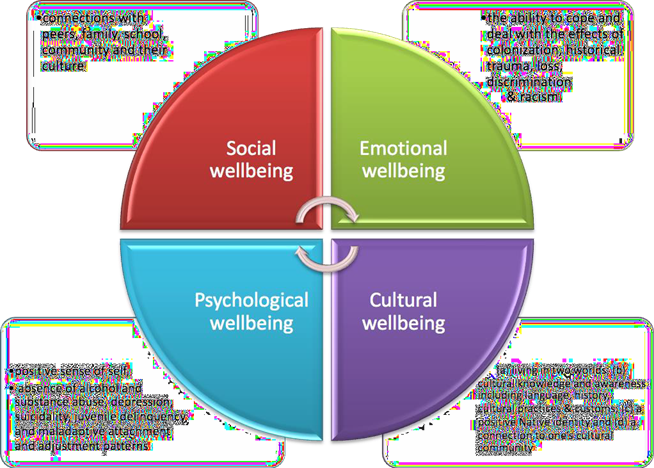
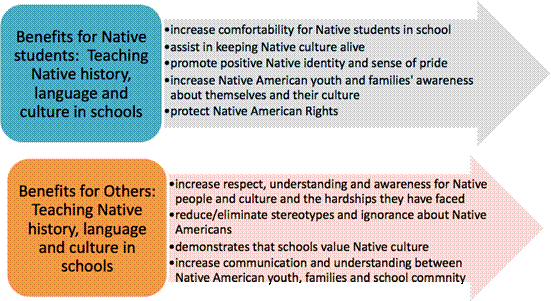
Each of these areas of well-being significantly impact how children, adolescents and adults approach education, learning style and academic ability. Social well-being refers to the social development and relationships necessary for Native youth to succeed including connections with peers, family, school, and community. The second dimension is emotional well-being. This dimension refers to the ability to cope and deal with the effects of colonization, historical trauma, loss, discrimination and racism. Each of these factors has significant effects on the emotional well-being of our Native youth. Additionally, psychological health will focus on having an integrated sense of self, and freedom from the burden of mental health issues such as alcohol and substance abuse, depression and suicidality, juvenile delinquency and maladaptive attachment and adjustment patterns. The most critical area of development for our Native youth is cultural well-being which consists of four components: (a) ability to live in two worlds; (b) knowledge of history, culture and language; (c) a positive Native identity; and (d) a positive connection to one’s culture. As shown in Figure 2, there are benefits to be enjoyed by Native and non-Native students alike.
Figure 2: Benefits of Teaching Native History, Language and Culture in Schools
Numbers Do Tell a Story and the Untold Story
In order to provide empirical support for the academic achievement gap among Native Americans (in comparison to European Americans) in the state of Washington, three sources of public data were used: (a) the National Assessment of Educational Progress (NAEP) from the National Center of Educational Statistics (NCES); (b) the Common Core Data (CCD) from the NCES; and (c) data provided by the Office of the Superintendent of Public Instruction (OSPI). Given the parameters of the public datasets, the unit of analysis was the district rather than individual student scores as these were not available in any of the datasets (in order to protect the confidentiality of the students).
Description of the NAEP dataset. The National Assessment of Educational Progress (NAEP) is the only nationally representative and continuing assessment of what America’s students know and can do in various subject areas. NAEP results are based on representative samples of students at grades 4, 8, and 12 for the main assessments, or samples of students at ages 9, 13, or 17 years for the long-term trend assessments. These grades and ages were chosen because they represent critical junctures in academic achievement.
Problems with the NAEP dataset: Missing data. Upon thorough investigation of the NAEP database, the researchers concluded that much of the data for Native Americans is not available, missing, or incomplete. Although NAEP results are based on representative samples of students at grades 4, 8, and 12, there is a significant amount of data missing for Native Americans as a group. One of the potential reasons for the gap in the data may be due to reporting standards. Schools that have small numbers of Native Americans may not be required to report NAEP test results in order to protect the confidentiality of students’ academic scores. While the reasoning behind reporting standards is understood, this may contribute to a larger problem. Because Native Americans have small percentages at many schools within Washington State, the scores of these students at these schools are excluded from the NAEP database which prevents researchers and policy makers from being able to make an accurate assessment of Native Americans’ academic progress overall. This theme of missing data for Native American youth will be seen throughout all the datasets examined in this report. Therefore a question to consider when evaluating these results is: Is there an achievement gap among Native American students in Washington or is there a data gap thus rendering an incomplete picture of how Native American students are performing academically across the state?
Empirical evidence supporting the achievement gap: The NAEP dataset. The results of the NAEP data analyses were based on Native Americans in the State of Washington for grades 4 and 8 in comparison to their European American counterparts (see report for scores for all racial groups including African Americans, Latino/a Americans and Asian Americans). Although the data was limited for Native Americans, there was a consistent trend of Native American youth scoring significantly lower on WASL scores in reading and math when compared to European American youth for grades 4 and 8. We also examined the differences between these two racial groups separating analyses by gender, e.g. comparing Native American males to European American males and Native American females to European American females respectively. Using this framework for analyses provided a clearer picture to the extent of missing data on Native Americans. Here is a summary of the findings from the NAEP dataset for 2007 test scores:
- For 4th grade math, Native American males scored significantly lower when compared to European American males
- For 4th grade math, Native American females scored significantly lower when compared to European American females
- For 4th grade reading, Native American males scored significantly lower when compared to European American males
- For 4th grade reading, Native American females scored significantly lower than European American females
- For 8th grade math, Native American males scored significantly lower when compared to European American males
- For 8th grade reading, Native American males scored significantly lower when compared to European American males
- For 8th grade writing, Native American females scored significantly lower when compared to European American females
All of these findings support the academic achievement gap for Native Americans in Washington. However, the abundant amount of missing data on Native Americans and their performance on standardized tests in the state of Washington should be noted:
- For 8th grade math, no data for Native American females
- For 8th grade reading, no data for Native American females
- For 8th grade writing, no data for Native American males
- For 12th grade, no data for any of the subjects including reading, science, writing and math for Native American males or females
- For 4th, 8th and 12th grade, no data on science for Native Americans by gender
- This trend of missing data is consistent for 1996, 2003 and 2007
The trend of missing data is seen among some educational variables. The NAEP dataset provides valuable information and data from various domains including: student factors (e.g. attitudes about school, perceptions of success, and attendance); instructional content and practice (modes of instruction, classroom management, activities); teacher factors (e.g. preparation, credentials and experience); school factors (e.g. charter school or private school); community factors (e.g. urban or rural); and home environment (e.g. computers at home, newspaper at home). Unfortunately the data assessed across these domains (student factors, instructional content and practice, teacher variables, school factors, community and home environment) were missing at the time of this report for Native American students in Washington. This missing data can be valuable in assessing the causes of academic achievement gaps and assisting policy makers in implementing strategies for reducing these gaps. A National Indian Education study addressed many of these gaps; however, the data were not available for analyses at the time of this report.
Empirical evidence supporting the achievement gap: Office of Superintendent of Public Instruction (OSPI) dataset. Overall the OSPI data analyses demonstrated a consistent trend of an academic achievement gap between Native Americans and European Americans. Using this dataset, Native American students scored significantly lower than their European American counterparts on:
- math scores of the WASL across seven grades (3, 4, 5, 6, 7, 8, and 10) thus in elementary, middle and high school settings for 2006 and 2007
- reading scores of the WASL across seven grades (3, 4, 5, 6, 7, 8, and 10) thus in elementary, middle and high school settings for 2006 and 2007
- writing scores of the WASL across three grades (4, 7, and 10) thus in elementary, middle and high school settings for 2006 and 2007
- science scores of the WASL across three grades (5, 8 and 10) thus in elementary, middle and high school settings for 2006 and 2007
Therefore both the NAEP and OSPI datasets and their respective analyses provide empirical evidence to support the Native American academic achievement gap in the state of Washington.
Missing data and OSPI. It should be noted that out of 296 districts in the state of Washington, only 81 districts (27.6% of the total districts in Washington) reported their WASL scores for Native American students. However within the 81 districts, only a portion within these districts provided data for all of the WASL subjects across the grades for 2006 and 2007 for Native Americans. In fact, the average number of districts reporting WASL mean scores by subject for 2007 was 55 (18.6% of the total districts in Washington), ranging from 47 districts to 60 districts.
Out of 296 districts in Washington, only 215 districts have a significant number of Native students in their district. Using this number, we have some data for approximately 37.7% of the districts. Examining the average number of districts that provided data for WASL scores by subject (n=55), the percentage of districts reporting the status of Native American students is only 25.6%. Therefore, 74.4% of the districts in Washington are missing data on the performance of their Native students on WASL test scores from the OSPI dataset. As a result, the achievement gap only represents in 25.6% of the districts in the state of Washington. This large percentage of missing data points to the need for more data and detailed analyses of all Native students’ academic performance either by district or by county in order to accurately assess the “achievement gap.” Also this finding again brings to light the issue: Is it an achievement gap or a gap in the data reporting for Native Americans in Washington?
Biases in the conceptualization of the achievement gap. The achievement gap paradigm has one significant bias: using European Americans and European American standards as the “norm” means that other racial minority groups are left in the category as “deficient” unless they comply and are proficient with European American cultural competencies focused predominantly on middle class, male values. Yet there is limited (if any) empirical evidence to support that white, middle class, male values, standards and benchmarks are superior to other cultures’ values, standards and benchmarks. Even how one defines success and achievement is based on a culture’s value system.
Using race as a determining variable in explaining the achievement gap can be fraught with peril. We need to recognize and continually remind ourselves that race is a sociopolitical process rather than a biological one. Additionally, heterogeneity exists within racial categories. Due to the genocide of Native Americans, there are many multiethnic and multiracial individuals who are classified as Native American but may also be classified by another category due to sociopolitical issues, pressure from inside and outside one’s racial group, and misclassification. Most importantly, race is a proxy variable for a very complex phenomenon with multiple dimensions in the United States. Racial classification and differences found based on these classifications can be due to a multitude of factors including racial socialization, prejudice, discrimination and racism, processes of resilience in protecting one’s identity while rejecting “white” standards in order to maintain a sense of self, stereotype threat, access to cultural resources and cultural capital, socioeconomic resources, exposure to European American ways of living, and racial and ethnic identity development. Therefore, this section of the report is best viewed as a launching point to examine the multi-dimensional phenomenon of race in Washington when interpreting differences on test scores based on race.
Research on Native Americans as a separate entity. Given the limitations of using racial comparisons on performance of students of color, the second half of the quantitative analyses focused on examining factors that hinder or promote academic achievement for only Native American students in Washington. A dataset was created merging information from OSPI and the Common Core Data from NCES using districts as individual units. Two types of analyses were used: correlation matrices and hierarchical regression analyses (for more detail on the variables and analyses, please review pp. 47-74 in the full report and Appendix B for tables). Factors were placed in three categories: demographic, economic and school personnel (see Tables 1 through 3 below).
Table 1: Demographic Factors Associated with WASL Test Scores
| Factors Associated with Lower Scores on WASL | Factors Associated with Higher Scores on WASL | |
| Higher percentage of Native students | Higher percentage of White students | |
| Having Native students placed in: -Career technical education -Gifted programs -Disability programs | Number of students per classroom | |
| Number of Native students (both male and female) in district | Size of the cohort | |
| Dropout rates for Native American students | Individualized education plans | |
| Advanced placement programs | ||
Table 2: Economic Factors Associated with WASL Test Scores
| Factors Associated with Lower Scores on WASL | Factors Associated with Higher Scores on WASL | |
| The higher the number of free or reduced price meals | Higher median family income | |
| Households occupied by 1-2 persons, 3-4 persons and 5+ persons | ||
| Total Population above poverty (ages 5 to 17 years old; males; females; males ages 5-17 years old and females ages 5 to 17 years old) | ||
For school personnel, every factor was associated with higher scores on the WASL for Native students (see Table 3)
Table 3: School Personnel Factors Associated with Higher WASL Test Scores
| School Personnel Factors Associated with Higher WASL Scores | |
| Average years of educational experience | LEA Administrators |
| Percentage of teachers with at least a Masters degree | LEA Administrative support |
| Total number of staff in district | Librarians/media specialists |
| Pupil/Teacher ratio by district | Library media support staff |
| FTE teachers | Other support staff |
| Instructional aides | School administrators |
| Instructional coordinator | School administrative support |
| Elementary guidance Counselors | Secondary guidance counselors |
| Elementary teachers | Secondary teachers |
| Student support services staff | Total guidance counselors |
| Ungraded teachers | |
All of these factors in the tables were found to be significantly correlated with WASL test scores (see Appendix B and Tables 22-24 for more detail). Regression analyses were conducted to examine what factors predicted higher scores on the WASL by grade and subject for 2007. Given the limited number of districts with WASL data (the number ranged from 47 to 60), we only examined the following predictors in accounting for variance (range of test scores) on WASL scores among Native American students:
- Demographic factor: percentage of Native American students enrolled;
- Economic factor: free and reduced lunches as a socioeconomic indicator;
- School personnel factors: percentage of teachers with at least a master’s degree; number of full time teachers employed in the district; pupil/teacher ratio and student support personnel (this includes number of instructional aides, guidance counselors, library specialists, student support services such as physical therapists and language specialists). Across almost all the grades in elementary, middle and high school, the following factors significantly predicted the variance on the WASL test scores across subjects:
- Demographic factor: Percentage of Native American students was found to account for 7.9% to 26.5% of the variance explained depending on the grade and subject; the higher the percentage of Native students, the lower the score on the WASL
- Economic factor: Free and reduced lunches was not a significant predictor of WASL scores when controlling for percentage of Native American students in the district
- School personnel factors: The school personnel factors significantly predicted higher WASL scores for elementary, middle and high school Native students accounting for 13.8 to 29.7% of the variance depending on the grade and subject.
These analyses support the possibility of prevention and intervention strategies for increasing the WASL scores by examining the unique issues facing schools with higher percentages of Native students enrolled and increasing school personnel resources. Geographical Setting and Test Scores: Urban, Suburban and Rural Natives. One issue that seemed to emerge when discussing academic performance among Native Americans: How are Native American students doing in rural areas in comparison to those in urban areas?
Analyses of variance were conducted comparing average test scores across four geographical settings (urban, suburban, small town or rural areas) among Native students living in the state of Washington. We examined the 2007 WASL test scores (reading and math; also science and writing when available) for the following grades: 3, 4, 5, 6, 7, 8 and 10.
The results were found comparing Native American students’ WASL test scores across four regional types (urban, suburban, small town or rural):
- Elementary school: For 3rd grade there are no differences among the four geographical locations; for 4th and 5th grade, Native American students living in rural or small town areas have significantly lower scores when compared to those living in urban and suburban areas for math and science; however no differences were found for reading
- Middle school: For 6th grade, no differences for reading and math scores; for 7th grade, no difference for reading , writing and math scores; and for 8th grade, no difference for reading, math and science
- High school: For 10th grade, differences were found for math and science with Native American students residing in small town or rural settings scoring significantly lower than urban and suburban Native Americans.
Missing data. It should be noted that the analyses were based on a limited number of districts (ranging from 45 to 58 depending on the grade level); therefore, the generalizability of these findings is limited. Additionally, there is a bias in the data, as the majority of the districts that we had test scores for Native American students typically had higher percentages of Native students enrolled in comparison to those districts that were not in the analyses. Providing test scores by geographical type (urban, suburban, small town or rural) for all Native students within the state of Washington while controlling for socio-economic factors and percentage of Native students and White students in the schools might yield more meaningful findings in understanding the unique challenges and issues facing Native students in urban and rural areas and those living either near or on the reservation in comparison to those living off the reservation.
Future recommendations. Based on all of the analyses conducted using NAEP, OSPI and CCD datasets, two trends emerged: (a) there is an academic achievement gap between Native Americans and European Americans across elementary, middle and high schools in the state of Washington; and (b) there is an abundant amount of missing data on Native American students and their academic experience and performance within the state. The fundamental purpose of this report is to reduce and eliminate the academic achievement gap for Native American students. In order for prevention and intervention programs and responsible and responsive funding to occur, more research is needed to determine what factors directly affect Native American youth in school, focusing on different domains of academic achievement including positive factors (retention and graduation rates, increases in grades, test scores and overall academic performance, and positive familial and community variables) that enhance their academic wellbeing. Additionally, negative factors need to be reduced and/or eliminated such as dropout rates, decreases in grades, test scores and overall academic performance, and family and community issues such as drug, alcohol and violence.
Recommendations for future research. Given the trends and findings on the academic performance on standardized test scores, specifically the WASL, the following recommendations are made for future research:
- Understand the developmental transitions between elementary, middle and high school that may be impacting standardized test scores among Native American students
- Examine how school personnel work together and other dimensions related to individual, family, school and community environment
- Commit to tracking Native American students longitudinally, e.g. over time, on several academic indicators (grades, participation, attitudes towards school and subjects, standardized test scores) in relation to individual, family and school factors
- Study developmental processes and milestones for Native American students particularly in the transitions from elementary school to middle school and middle school to high school
- Explore the effects of full-time teachers (e.g. quality of teacher’s skills, experience, and interactions with the students) and student/teacher ratio on academic performance
- Identify the unique challenges and stressors Native American students face depending on the percentage of Native American students enrolled and the type of geographic setting of the school (urban vs. rural, on or off reservation)
- Investigate key school personnel factors that have a strong positive impact on WASL scores and how they are important to students’ success
Documented Cultural Standards
In 1993 the Basic Education Act was passed by the Washington State Legislature. The act called for the development of common learning goals for all students in Washington State (K-12). The intent was to increase academic achievement and to “provide students with the opportunity to become responsible citizens, contribute to their own economic well-being and to their families and communities, and enjoy productive and satisfying lives” (RCW 28A.630.85, cited in Office of Superintendent of Public Instruction, OSPI, 2006b). The Commission on Student Learning was formed and charged with the tasks of: (a) setting academic standards to meet the learning goals, (b) creating an assessment system that was linked to the standards, (c) establishing a mechanism for accountability, and (d) recommending additional steps to ensure ALL students could achieve the standards.
Educational reform efforts in Washington State have focused on increasing academic achievement for all students. However, concern that not all groups of students were achieving in similar ways brought about the formation of the Multi-Ethnic Think Tank (METT). In 2001, the METT prepared a “Call to Action” that recommended seven action steps for state leaders. These action steps were designed to transform the educational system to honor the cultural and linguistic diversity that students brought to the formal educational process. This study’s review of published documents, websites, and professional presentations revealed that no progress had been made in implementation of two of METT’s seven action steps and that progress toward the five other action steps has been limited:
The two action steps for which no progress was made are:
- Add a fifth Washington state learning goal to ensure culturally competent education; and
- Recruit and retain racial and ethnic minority staff.
The five actions steps for which limited progress was made are:
- Infuse multicultural education goals into existing four Washington State learning goals;
- Integrate multicultural and technological learning objectives into the Washington State Essential Academic Learning Requirements (EALRs);
- Standardize the data collection, categorization, and reporting of racial, ethnic, and low socio-economic groups;
- Require that professional development is culturally and linguistically responsive; and
- Provide alternate measuring tools to assess student academic achievement.
To date, multicultural perspectives continue to remain largely “invisible” within state education goals and have only limited visibility within academic standards. Relative “invisibility” extends to the educational workforce where no progress has been made in bringing increased diversity into school administration or teaching. This is a critical concern as lack of visibility communicates lack of value for worldviews and contributions of members of culturally and linguistically diverse populations in Washington State. Progress has been made in developing performance-based pedagogical standards for teacher candidates that involve culturally responsive teaching practices. However, these standards have yet to be successfully implemented. Some data regarding student populations and performance is more readily accessible. However, data that could inform improved teaching practices are only inconsistently reported for Native students due to their small numbers. This makes interpretation of their meaning difficult. While alternative means of assessment are now available to measure academic achievement, students must fail before these alternatives can be accessed. The transformative change that was intended to occur through Washington State’s educational reform efforts has yet to be realized.
Such a shift will require systemic change wherein multiple ways of being are embraced and supported within classrooms, schools, and communities. The voices of the people reflected their passion regarding the critical need to Indigenize the curriculum and the ways in which curriculum is imparted. Traditionally, the curriculum of Native communities has been the environment. The next section provides insights into Indigenous thinking and meaning with regard to our environment.
Confluence of Indigenous Thinking & Meaning with Regard to Our Environment
Much of our prevailing wisdom is informed by the teachings of plant and animal peoples. The ancestral spirit arising throughout our Native communities beckons us to listen to the environment. All the cultural stories are part of our incredibly comprehensive intellectual inheritance. These ancestral stories reveal truths about survival. This form of education encourages us to learn from our surrounding environment. We interpret patterns for ourselves and apply the relationships we see. We imagine new plans. We add to the stories and we retell them and we improve our collective memory. The change that happens through this process is transformative. Now that the world is changing so quickly, we are implored to act with immediacy. When we share the stories, we can reconfigure the world so all people—including the first people—can survive and flourish. Our destiny is their destiny.
Our worldviews are written onto the land. There is anger, grief, stress, resistance and rage, and there will continue to be as long as continued destruction of the land and people occurs. The challenge now is to assist students in channeling those emotions, becoming warriors in the sense that can be compared to a concentrated force of energy that wills a seed to sprout and grow in the spring, breaking out of its time of rest. There is enough time to guide every child to their highest possible selves; given the history, the trauma and the legacies, clearly, interventions and teachings need to be more targeted to address and correct what has gone wrong that is still written in the bodies and minds of young people.
The question is no longer whether culture should be included in curriculum, but instead how and when it will be included. However, the integration of culture into a comprehensive, responsible curriculum would be a natural process, not a forced one. Modern education institutions are heavily invested in a western philosophical framework, but they are now seeing the value of integrated and culturally infused curriculum. Indigenous cultural knowledge can assist in the reorientation and transformation of modern education, moving towards philosophical foundations that promote integrated ecological consciousness.
Comprehensive Education Plan to Increase Native American Educational Achievement
In the introduction of this report, we started with a vision and stated that this report was being presented to the legislature with an understanding of our Native legacy and a responsibility to all learners; we asked that you, the reader, listen with a constructive mind and open heart. The goals and recommendations in this report are grounded in a foundation of work that is currently being done. This will not be a plan that sits on a shelf, because the people doing the work outlined in this study are creating change now and they will continue to do so. This plan was requested because education leaders are troubled by what they are seeing: an achievement gap between Native and non-Native students. We identified why this achievement gap is happening and this section describes how we can close that gap within five years and eliminate the gap by 2020. As listed on pages 104-106, we believe that our investigation confirms the need for achievement and success goals in at least four areas:
- Teachers, Administrators, School Boards, and Tribes. We offer four goals that speak to the critical need to develop relationships between school districts and tribes. A sustainable relationship will depend on a shared understanding of the cultural protocols and policies of each domain. This shared understanding will serve as the foundation for formal relationships to emerge and flourish. An ultimate indicator for the Native community to know whether or not a relationship evolves is the incorporation of Native language, culture, and history in the public school curriculum.
- Health and Well-Being. We advance six specific goals to ensure that our Native children are given an opportunity to be their best in school and life. This means establishing measurements to monitor the health and well-being of Native American children, youth, adults and families that are reliable, valid and standardized based on a sample of Native Americans in Washington State. We also need culture-based prevention and intervention programs to provide important transition services and reduce risk factors. Ultimately, in place will be standard assessment instruments in public and tribal schools that assess students’ overall well-being and social and emotional functioning.
- Academic Achievement and Educational Attainment. We advocate for seven goals to ensure that Native children are proficient or advanced in reading, writing, and math at various grade levels and upon high school graduation. To do so will mean increasing the number of students passing all their classes in junior and senior high school and reducing truancy and dropout rates. This needs to be complemented by increasing Native student exposure to college preparation opportunities. We will be able to ascertain progress by monitoring increases in high school graduation and college going rates.
- Assessment of Learning. Here we list two goals that support Native students by offering assessments that will provide more intervention and direction to students and families to improve student learning. Several other primary outcomes will be an assessment that includes indicators endorsed by Native communities and a determination of whether all students can demonstrate mastery pertaining to the ancestral and contemporary history of tribes and urban Indian communities in Washington. The evidence of true progress will be whether or not public school districts and OSPI embrace indicators of achievement and success that are relevant to Native students and are equally applicable to non-Native students.
We feel that these goals are listed in order of priority; although each area has its own justification for being the focus of financial and policy support. Of course there are other equally important areas. The justification for involving teachers, administrators, school boards, and tribes brings attention to all the stakeholders that can provide leadership and service. Education professionals, parents, business, and the public at large possess the spirit of support for those ultimately held responsible for the education of our children. We heard this in the many listening sessions held throughout the state. Increasingly vocal was the call for Native people to be active in the mission, scope, and influence of educating their community. To do so, we highlight five straightforward recommendations (described more fully in later sections that follow):
- Shift the Paradigm through Relationship Building (fuller description, pp. 107- 131). From the onset, we believed that there is the possibility to develop a comprehensive plan already in action. It is a plan that represents the concerted efforts of community and political leaders over the last couple of decades and that will serve us well into the future. It is made possible when important stakeholders representing the public’s interests feel that Native children are important. Although obvious, it is not always a position that is borne out in today’s reality. What is emerging is a movement of stakeholders who recognize that tribal sovereignty strengthens community ethos rather than weakens political agendas. Much of it simply starts with acknowledging that Native people have a language, culture, and history. That such acknowledgement raises an obvious bewilderment of, “Why haven’t we done this before?” We believe that funding should support efforts to develop relationships between public school districts and tribes as well as help urban Indian education programs to integrate Native teaching and learning that benefits Native and non- Native children. We highly recommend that this funding support the integration of curriculum by well-trained stakeholders agreeable to the spirit of this report.
- Provide resources for pre- and in-service educators and stakeholders (fuller description, pp. 132-141). We need to graduate non-Native and Native teachers/administrators/school psychologists and related service providers whose knowledge, skills, and cultural understanding will bring about the changes needed to improve the education of Native children and youth. This approach would help assure effective and efficient use of resources, time, and talents required to implement such programs and would assure sustainability of the programs. Equitable education for Native students with or without disabilities is essential to the future of all Native peoples; as such, it is a matter of social justice. It is time for all universities/colleges in the state of Washington responsible for administrator/teacher/related service provider professional training to systemically address Indian education. We also need to consider the increasing degrees of sophistication operative in tribal schools and lessons to be learned in the areas of programming, instruction, curriculum, parental involvement, and relationship building. Tribal schools include Chief Leschi, Lummi Tribal and High School, Muckleshoot Tribal School, Paschal Sherman Indian School, Quileute Tribal School, Wa He Lut Indian School and Yakama Tribal School. We are convinced that our public school colleagues can learn from the experiences of their tribal school colleagues.
- Improve data collection and reporting (fuller description, pp. 141-147). Clearly, we have a chance to develop a database that reports on indicators of interest to society at large and Native populations. We can do so while protecting confidentiality and informing policy and practice. Collectively and finally, data pertaining to Native students can be used by program personnel close at hand to guide daily decisions and develop long-term strategies; and remember that we can seek higher levels of data aggregation until statistical confidence is satisfied (i.e., county or ESD level if data are limited at the school or district levels). Indicators should include noncognitive factors that influence academic achievement. Many people recognize the need for improved data collection and reporting, and we recommend following up on the opportunity to partner with ETS which has the technical capability and substantive understanding of how to do so.
- Develop a partnership with the National Education Association (fuller description, pp. 147-149). NEA developed a research-based guide entitled, C.A.R.E.: Strategies for Closing the Achievement Gap. C.A.R.E stands for Culture, Abilities, Resiliency, and Effort. Partnering with NEA offers the opportunity to take advantage of established resources that target the very issues we are addressing in this report. Such a partnership is exciting because NEA is willing to revise any materials and resources to develop culturally competent school systems that meet the needs of Native students and communities. We anticipate that following through on a recommendation to partner with NEA will result in opportunities to share our learning and successes with national audiences through NEA conferences, the NEA website, and the trainings that NEA produces for its 3.2 million members.
- Increase state support and collaboration (fuller description, pp. 149-151). We need funded mandates to expand service delivery and maintenance of existing state programs that can address issues of concern identified in this report. This means expanding OSPI’s Indian Education Office while maintaining services offered in the Center for the Improvement of Student Learning (CISL), Title I-Part A, Office of the Education Ombudsman (OEO), Family Policy Council (FPC), and Governor’s Office of Indian Affairs (GOIA). Calls for increased levels or maintenance of funding may be tenuous given the current economic crisis. However, this is the most important time to invest in the most renewable and sustainable resource we have, our children. To help states and tribes wrestle with funding priorities, we are setting the stage for a meeting of foundations (tribal and non-tribal) to dialogue about the report’s goals and recommendations with the specific purpose of funding action strategies to close the achievement gap between Native and Non-Native students.
Shifting the Paradigm through Relationship Building. The Multi-ethnic Think Tank (2001) called for a “paradigm shift” in educational policies and practices to honor the cultural background of all students in Washington State. Native American students hold a unique status as dual citizens of their Tribe and of the United States. This unique status necessitates recognition of the sovereignty of Tribal Nations and the associated need to build government-to- government relationships between school districts and Tribes. This emphasis is consistent with the Centennial Accord signed by Washington State and Tribes in 1989 and the subsequent Millennium Agreement in 1999. The Millennium Agreement, in part, expressed a commitment to strengthen the relationships between government entities and federally-recognized Indian Tribes by “educating the citizens of our state, particularly the youth who are our future leaders, about Tribal history, culture, treaty rights, contemporary Tribal and state government institutions and relations and the contribution of Indian Nations to the State of Washington” (Governor’s Office of Indian Affairs, 2008). This commitment serves as the foundation for the provisions of HB 1495 passed in 2005 that encourages: (a) the building of government-to-government agreements between school boards and neighboring Tribes and (b) the identification and adoption of curriculum focused on Tribal history, culture, and government. Here we highlight various areas important to realizing the benefits of this legislation.
The OPSI Office of Indian Education (OIE) has played a key role in fostering collaborative government-to-government relationships between federally recognized Indian Tribes and school districts. After the passage of HB 1495, OIE hosted the initial meeting in 2005 to discuss the legislation’s impact bringing together Tribal chairpersons, Tribal culture and language specialists, Washington State School Directors’ Association staff, and OSPI staff. Since that time, OIE has compiled a list identifying the location of the 29 federally-recognized Indian Tribes relative to the geographic location of the 295 school districts in the State of Washington. This serves as a tool for Tribes and school districts in identifying their closest neighbors. In addition, OIE has taken the lead in facilitating the development of a sovereignty curriculum, Since Time Immemorial: Tribal Sovereignty in Washington State, which can be adapted for implementation by collaborative teams of Tribal leaders, administrators, and teachers as it relates to local Tribal contexts across the state. OIE has focused on building student leadership in the implementation of HB 1495 through holding a yearly Northwest Native Youth Leadership Summit focused on the legislation. In addition, OIE has actively disseminated information regarding HB 1495 through regional, state, and national presentations.
The Memorandum of Agreement (MOA) signed by Tribal and state education leaders in 2006 represents another step forward in fostering the implementation of HB 1495. Representatives from federally-recognized Indian Tribes partnered with the Washington State School Directors’ Association (WSSDA), the State Board of Education, and the OSPI to identify responsibilities that each agency and participating Tribe would assume. In addition, the MOA provided definitions for terms that serve as guides in implementing HB 1495 (i.e., sovereign nation, collaboration, government-to-government, achievement gap, federally recognized Indian Tribe, guidelines, oral histories, and tribal intellectual and cultural property rights). In 2006 WSSDA sought to determine the status of Tribe-school district relationships by conducting a survey of school board chairs/presidents. Results indicated that 21 out of the 61 school districts represented in the study interacted with local Tribes. These interactions varied widely, from making initial contacts to having established an “open, working relationship” that was characterized by “mutual support of programs and mutual respect.” Examination of overall responses to open-ended questions revealed three overarching themes: (a) need for regular Tribe-school district communication, (b) need for sharing best practices in building Tribe-school district relationships and implementing HB 1495, and (c) expected positive outcomes. It appeared that the majority of the school district leaders responding were not aware of the applicability of HB 1495 to their district and/or had little idea of how to start building a relationship. Participants also identified barriers, including lack of funding associated with HB 1495 and lack of available curriculum.
Examination of Tribe-school district relationships for the current study (2008) resulted in identification of 36 public school districts out of the total of 295 (12%) that had some type of relationship with a neighboring Tribe(s). The nature of these relationships varied greatly. Some districts were initiating discussions with a Tribe to explore possibilities for cooperation. Others were cooperating in the use of existing educational materials, such as the Northwest Native American Reading Curriculum (OSPI Office of Indian Education, 2002). Some schools were partnering with Tribes to include a First Peoples’ Language Program in their course offerings or were participating in a pilot program for the newly created sovereignty curriculum (OSPI Office of Indian Education, 2008). (It should be noted that, while 30 school districts wanted to be included in the pilot program, only 10 school districts could be included due to funding limitations.) Some tribal leaders and/or school district administrators reported involvement in cooperative curriculum development efforts. However, implementation of curriculum development focused on tribal culture, history, and government, as specified by HB 1495, was a relatively new element within most of these relationships.
It should be noted that a few Tribe-school district relationships were further along in their development. For example, one school district superintendent had partnered with the neighboring Swinomish Tribe to conduct research regarding attributes associated with Native American student educational success (Bruce, 2006). A partnership team involving two Tribes and a school district was providing professional development for other Tribal and school personnel on how they were implementing HB 1495 (Suquamish Tribe, Port Gamble S’Klallam Tribe, & North Kitsap School District, 2007). The Port Gamble S’Klallam Tribe was also involved in a case study that examined its success in increasing high school graduation rates to 100% for their Tribal members (Clegg & Associates, 2008). A second Tribe-school partnership team had developed a presentation of their comprehensive, cooperative approach to fostering tribal student success (Lower Elwha Klallam Tribe & Port Angeles School District, 2008). These programs can serve as models for other schools looking to implement HB 1495 and promote Native American student achievement.
Examination of relationships between federally-recognized tribes and school districts illuminates the complexity that is involved in developing an effective relationship. The perspectives shared by Tribal members through interviews and listening sessions held across the state indicate that an effective government-to-government relationship goes beyond the development of formal curriculum to be implemented within a school classroom. It encompasses the underlying values and attitudes that shape the school district and Tribal environments. It involves shared leadership in governance and in shaping joint school-Tribal education policies. It extends into family, community, and Tribal activities to make real the concept of “It takes a community to raise a child.” An ethic of care underlies interactions with teachers and the status of elders as primary educators is recognized. The curriculum is place-based with incorporation of an array of teaching and learning strategies and content that relates to Tribal history, culture, and government. An effective government-to-government relationship involves regular communication and coordinated planning and action to foster student success. It validates each student’s gifts, contributions, and intrinsic worth. The elements of an effective government-to-government relationship between a school and a Tribe are further delineated in Figure 3 on the following page (note: this is also Figure 15 on pg. 123 in the complete report).
When elements of an effective government-to-government relationship are enacted by schools and Tribes working in unison, various positive outcomes would be expected for Native American students. When enrolled in schools, increased attendance and active engagement in learning activities would be observed. Native community members, families, and students would work together with their teachers and school administrators to infuse Tribal culture, history, language, and government into the school curriculum. Support would be in place to ensure successful transitions at various critical junctures – from preschool to elementary, elementary to middle school, middle to high school, and high school to college. Students would set and attain educational goals that led to their high school graduation and post-secondary enrollment and graduation. They would achieve career and health-related goals that they had set for themselves. They would have opportunities to “give back” to their communities through service learning projects facilitated by their schools. Through effective government-to-government relationships, Native students would become leaders in their Tribal communities, as they played a role in building infrastructure and sustainable practices that benefit the next seven generations.
While it is critical to highlight what works in building comprehensive Tribe-school government- to-government relationships, it is also important to recognize the tenuous nature of these relationships. A persistent barrier encountered in school environments is racism. While this racism may generally lie just below the surface, it often flares up during periods of controversy, such as when Tribes assert their sovereignty through fishing, hunting, or whaling practices. This may result in overt harassment of Native students by classmates or more covert discrimination. Racism needs to be brought to the surface and dealt with directly in a constructive manner. It is anticipated that infusion of accurate information about tribal sovereignty, history, and culture into the curriculum will bring new cross-cultural understanding. However, this will likely not be enough. Continual reflection by all cooperative partners on the assumptions that underlie behaviors and actions will be necessary. As these assumptions are surfaced, partners in the relationship then have the opportunity to replace inappropriate assumptions with more appropriate understandings of the context surrounding particular events.
Examination of the process involved in bringing attention to the passage of HB 1495 and its implications for public schools reveals the need for leadership from multiple realms. Fostering statewide change in curriculum represents a highly complex and multi-dimensional process. As such, representatives from various stakeholder groups have stepped forward to take on leadership roles in carrying forward the implementation of HB 1495 and its underlying intent to enhance the academic achievement of Native American students. State Representative John McCoy, who was instrumental in the passage of the legislation, has continued to visibly support and advocate for the infusion of tribal history, culture, and government into the curriculum. He has been joined by other State Legislators and American Indian education leaders, Claudia Kaufman and Don Barlow, in advocating for infusion of tribal government, culture, and history into curriculum. Leaders of federally-recognized Indian Tribes in Washington State came together with the WSSDA, the State Board of Education, and OSPI to sign a Memorandum of Agreement (2006) that provided guidance for the implementation of HB 1495 (see Appendix P). Some Washington school district superintendents have assumed key leadership roles in building relationships of further importance with Tribes.
2020
Leadership, Governance, & Policies
- Dialogue occurs regularly between decision-making bodies
- Equity in decision-making & policy formation
- Tribe, parents, & schools partner in making decisions about use of Title VII & Impact Aid funds
- Commitment to increase number of Native school administrators & school board members
- Meetings take place at schools & on reservation
- Administrators participate in tribal community activities (e.g., honoring ceremonies, potlatches)
- Program evaluation to ensure policy translates into practice throughout the school
Shared Values & Attitudes
- Mutual respect & trust
- High expectations & a belief that all students can learn
- Consistent message that all students will graduate
- Holistic approach – emotional, social, physical, & academic development are interwoven
- Understand that building relationships take time
- Understand tribal sovereigntyRespect for cultural & intellectual property rights
- Understand that racism exists & should be brought to the surface
Teachers
- Caring attitude
- Commitment to increase number of Native educators
- Participate in tribal community activities (e.g., honoring ceremonies, potlatches)
- Elders as educatorsParticipate in professional development provided by tribe
- Regular communication with tribal program staff
Family, Community, Tribe, & School Partnerships
- Affirm value of family, tribe, & community involvement in schools
- Community-based learning & teaching partners
- Family & community volunteers in schools
- Wrap around, coordinated services
- Outreach to families through reservation- based activities
- Hold parent-teacher conferences on reservation
- Allow tribal employees paid time to volunteer in schools
- Understand that family members may
Students
- Validation of each student’s gifts, contributions, & intrinsic worth
- Individualized attention
- Active participation in decision-making about the learning process, including self-evaluation
- Clear plan for path to graduationCareful tracking & follow up on attendance & absences
- Youth leadership preparation
- Opportunity for all students to come to reservation to learn about culture
- Sense of responsibility to community
Curriculum & Pedagogy
- Authentic, tribe-specific curriculum pertaining to culture, history, & government
- Place-based learning
- Array of options for completing courses (e.g., credit retrieval opportunities, after school programs, flexible summer school)
- Diverse teaching & learning strategies
- Diverse means for demonstrating learning (assessment strategies)
- Native American ClubOpportunity Fairs (show choices for after graduation)
- Consideration of concepts of time (e.g., wait time, past/present/future)
- Support at critical transitions (e.g., middle to high school)
Other state and federal organizations have stepped forward to contribute to the efforts to develop a comprehensive plan for closing the achievement gap for Native American students in Washington State. These entities (and the stakeholder groups they represent) include:
- Affiliated Tribes of Northwest Indians – tribal representatives,
- National Education Association – teachers,
- Washington Education Association – teachers and tribal communities,
- WSU Superintendent Certification Program – superintendents,
- Northwest Indian College – Oksale Native teacher graduates,
- The Evergreen State College – higher education institutional program inventory,
- OSPI Office of Indian Education – Indian education community,
- Northwest Indian Fisheries Commission – tribal communities,
- South Puget Intertribal Planning Agency – consortium tribes,
- Washington State Indian Education Association – Indian educators,
- National Indian Education Association – Indian education resources,
- Northwest Justice Project – community outreach,
- Environmental Education Association of Washington – environmental advocates,
- Washington State Library – educational resources,
- Center for Improvement of Student Learning – families, communities, & schools.
The systemic change needed to positively impact Native American student achievement requires the broad network represented by these organizations.
Several barriers were identified in relation to the implementation of HB 1495. The most commonly cited barrier was lack of funding associated with the legislation. Both school districts and tribes had limited funding sources available to carry forward curriculum development and adoption themselves. Organizations, such as the Washington State School Directors’ Association, that was charged with leading the tribe-school, relationship-building initiative was also likely restricted by lack of funding tied to their responsibility. This funding limitation appeared to lead to a few educators dedicating inordinate amounts of time beyond typical work schedules to carry the initiative forward resulting in great potential for “burnout”. This was particularly true for Native educators, whose numbers are proportionately very small. “Fear of the unknown” for non-Native educators and a history of negative educational experiences for Native American families and communities served as other barriers to relationship-building. It appeared that many school districts were not aware that HB 1495 applied to them and/or did not know who to contact or how to start the process of building a relationship with a Tribe.
What We Need to Know and Do to Facilitate Native Student Success
The voices of the people and previous research have emphasized the critical nature of relationship-based educational service delivery to promote Native student success. As such, professional development has been a focus of concern on multiple levels including pre-service and in-service training of non-Native and Native professionals, and recruitment and retention of Native professionals. In order to meet the needs of Native students, families, and communities, professionals both Native and non-Native need to develop cultural competency including understanding (a) Tribal sovereignty; (b) the history of Indian education; (c) current Indian education research, policies, and laws; (d) Indigenous communication and ways of knowing; (e)
Indigenous language and culture preservation and restoration; and (f) developing culturally responsive curriculum and assessment as well as teaching methods that match the Native students’ ways of learning. The need for such training is evident in the literature and in the voices of the people.
Administrators (principals, superintendents, special education directors) are in a unique position as educational leaders to set the tone for the climate within a school. Leaders who facilitate shared leadership among their faculty, staff, and students create an environment that is conducive to collaboration. Within school collaboration is necessary as school personnel come together to reach out to tribal communities in the areas of curriculum development and educational reform. It is critical that administrators take the lead in developing partnerships with tribal leaders. It is also important to note that administrators are responsible for all students within their assigned schools/district. In order to be a credible leader, one must possess the necessary knowledge and skills as well as being able to mobilize people to action. Thus, administrators need professional development (pre-service and in-service) in Indian education to be effective leaders in moving educational reform in a direction that finally begins to implement recommendations that have been articulated for over the past eighty years. Simultaneously, teacher training must be addressed.
Teachers are the primary service providers who have the most direct time with students apart from their families. Research literature and the people interviewed for this report have voiced that caring, compassionate, respectful, culturally competent teachers are key to Native student development along with their families and communities. Traditionally, neither teacher nor school psychology training programs have paid attention to Indian education, resulting in the perpetuation of overrepresentation of Native students in special education and their underrepresentation in gifted and talented programs. Teacher referral is the best predictor of placement in special education. School psychologists are responsible for the bulk of the diagnostic testing that contributes to mis-identification of Native students. Therefore, cultural competencies in Indian education must be addressed in preparation programs responsible for training teachers and school psychologists.
Assessment issues abound and critically affect our children as do curriculum, teaching methods, classroom management, socio-emotional support of Native students, and developing and maintaining relationships with students and families. The NEA report, among others, highlights the need to increase the number of culturally and linguistically diverse teachers, the need to integrate culture and language into curriculum, and the need for cross-cultural communication competencies. Therefore, embedding Indian education into all teacher, administrator, school psychologist, and related service provider education programs, as well as increasing Native teachers, administrators, and related service providers is crucial.
University and college programs that are seriously committed to providing quality education for all their pre-service professionals, preparing them to provide equitable learning opportunities for Indigenous students, would include such standards and competencies as:
- All pre-service professionals will demonstrate an understanding of tribal sovereignty, history of Indian education, and current policies and best practices in Indian education (a Foundations in Indian Education course).
- All pre-service professionals will take part in a rigorous curriculum that incorporates indigenous knowledge, values, and practices so that it is culturally based and responsive to the education (assessment, teaching methods, curriculum, classroom management) of Native children (across the content areas of science, math, reading, language arts, music, art, physical education, social studies, etc.).
- All pre-service professionals will understand the importance of creating a community of learners, which would be emphasized throughout a given program design. Pre-service students will be a part of their local communities and gather with the people by sharing meals, dance, community-based environmental science projects, cultural arts, etc. These activities are critical to model for developing teachers who, in turn, will be more likely to engage their students in similar activities, thereby increasing motivation, persistence, and performance. This reflects using a strengths-based paradigm and promoting the achievement of students in the “Circle of Life”.
- All pre-service professionals will participate in collaborative learning experiences that are designed to be responsive to the education of Native children. The creation of collaborative learning experiences in conjunction with consortium tribes will allow participants to engage in rich conversation with practitioners and leaders regarding Native teaching and learning. It is important to note that collaborative learning experiences during participant internships and induction years will help create a synergy among those in such programs as they share experiences of success, challenge, and change.
- All pre-service professionals will learn how to establish consortium agreements with their local area tribes and/or tribal organizations that will address needs by creating collaborative learning experiences for pre-service and in-service professionals addressing the issues of Native student performance, curriculum development, and other long- standing tribal concerns.
The goal is to graduate non-Native and Native teachers/administrators/school psychologists/related service providers whose knowledge, skills, and cultural understanding will bring about the changes needed to improve the education of Native children and youth. The successful implementation of such endeavors will require strong program leadership and collaboration with all key players, sufficient resources to bridge the transition period, a collaborative governance structure, and interactive connections among all universities/colleges that provide pre-service and in-service professional development in partnerships with participating tribes. A continuous quality improvement approach would facilitate the management, implementation, and evaluation of such programs as they were developed and changed. This approach would help assure effective and efficient use of resources, time, and talents, which are required to implement such programs and to assure sustainability of the programs. Equitable education for Native children and youth with and without disabilities are essential to the future of all Native peoples and, as such, are a matter of social justice. Is it not time, for all universities/colleges in the state of Washington that are responsible for administrator/teacher/related service providers professional training to systemically address Indian education?
Conclusion and Summary
There is a persistent recurring theme in the literature. The Merriam Report (1928) recommended inclusion of Native languages and culture in the school system. The report entitled Indian Education: a National Tragedy – A National Challenge (U.S. Senate, 1969) recommended inclusion of Native languages and cultures to address the needs of Native people. The heralded report, Indian Nations at Risk (1991) advanced a goal to maintain Native languages and cultures from early childhood education through higher education to increase educational achievement and attainment. The White Conference on Indian Education (1992) recommended inclusion of Native languages and cultures to strengthen quality education services for Native children. The American Indian Research Agenda (Research Agenda Working Group, Strang & Von Glatz, 2001) focused on success and cited Native languages and cultures as being paramount to Native student success. One of the leading Native researchers in the country, Demmert (2001) found that Native language and cultural programs in school improved academic performance among Native students.
We found that the health and well-being of our youth and their families are primary concerns due the historical circumstances that conspired against Native American educational achievement. It is clear that to do our best in school and life, we must have the physical, emotional, and spiritual balances in place to really cultivate our intellectual skills and abilities. We found that quantitative indicators do suggest an achievement gap. However, it was equally important to find that standardized indicators are not good predictors of educational achievement among Native American students and that improvement in data collection and reporting are necessary to guide policy and practice.
The Multi-Ethnic Think Tank’s (2001) “Call to Action” for Washington State leaders advocated a education system that honors our students’ languages and cultural heritages and this was reaffirmed by Native people throughout many listening sessions we held to document the people’s voice. We would do ourselves a favor to honor our first teachers, the plants and the animals, and to do so in a way that respects the environment. Because it is so important, a plan emerged to establish goals around pre-service training and professional development for critical stakeholders, the health and well-being of youth and their families, academic achievement and attainment, and assessment of student learning. To realize these goals, it was recommended that we: (a) shift the paradigm through relationship building between schools and tribes and Indian education programs leading to integration of Native language, culture and history into the public school system; (b) provide resources for pre- and in-service educators and stakeholders; (c) improve data collection and reporting to better inform policy and practice to help student learning; (d) develop a partnership with the National Education Association to better align with teacher resources; and (e) increase state support and collaboration to increase Native American educational achievement because the most renewable and sustainable resource we have is our children.
Appendix E Budget
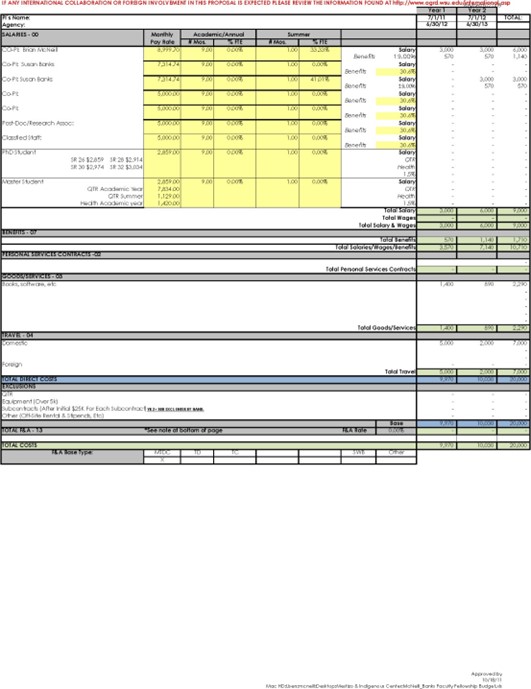
Appendix F Letter of Endorsement
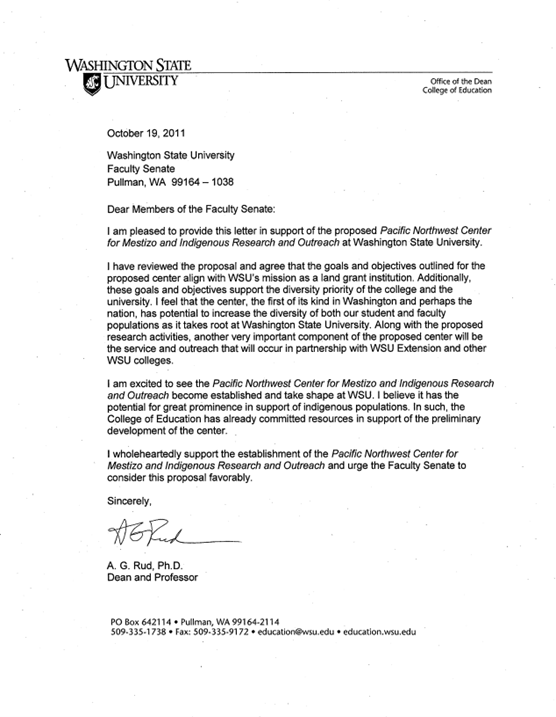
A PowerPoint exhibit was also provided and is available on the Faculty Senate website.
- Motion carried.
Constituents’ Concerns.
- There were no concerns.
Adjournment.
The meeting adjourned at 4:00.
Dorene Branson, Secretary Pro Tem
Comments